uncaged — a 3D motion clip
the process.
the idea
what i set out to create.
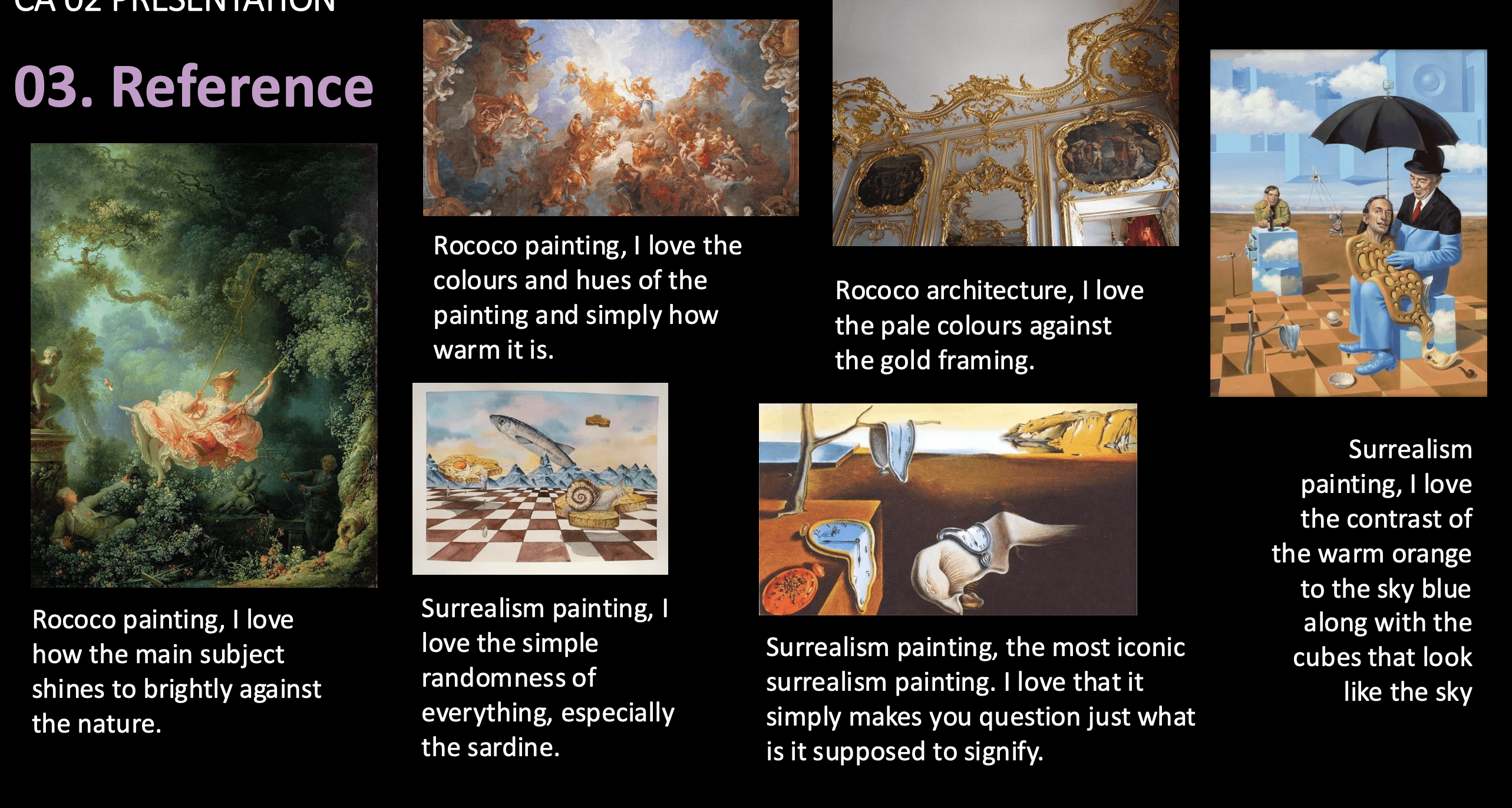
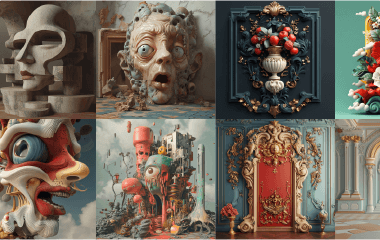
moodboard
I’ve always loved mixing soft visuals with weird energy, so this project gave me the perfect excuse to go all out. I chose Rococo and Surrealism — two art movements that couldn’t be more different, but somehow still work beautifully together.
My motion clip explores the symbolism of a birdcage. In the first half, I used Rococo to show a soft, ornate, dreamlike garden — a peaceful world where the cage door slowly opens and two birds fly free. It’s light, magical, and hopeful.
Then, I flip the vibe completely. In the second half, the camera shifts into a darker surrealist world: the cage now hangs by a chain, the door is locked, and instead of birds, there’s a giant creepy skull with a staring eyeball. A sardine, drooping clock, and floating stairs add layers of confusion and tension. The mood turns unsettling, like a dream that’s slowly going wrong.
This project wasn’t just about visual contrast — it was about freedom vs. confinement, life vs. death, and how style can shape emotion.
the process
from brainstorms to building blocks.
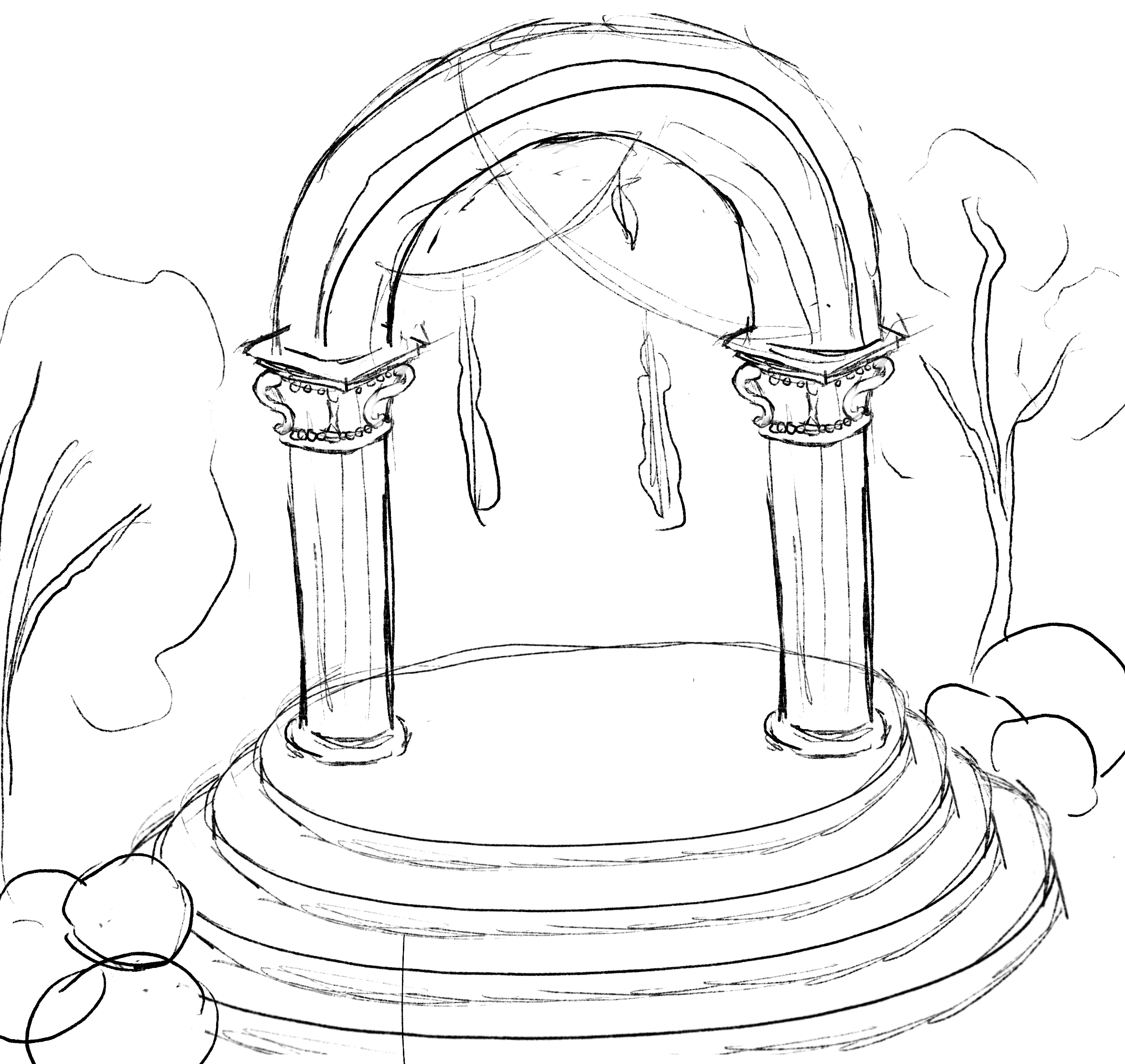
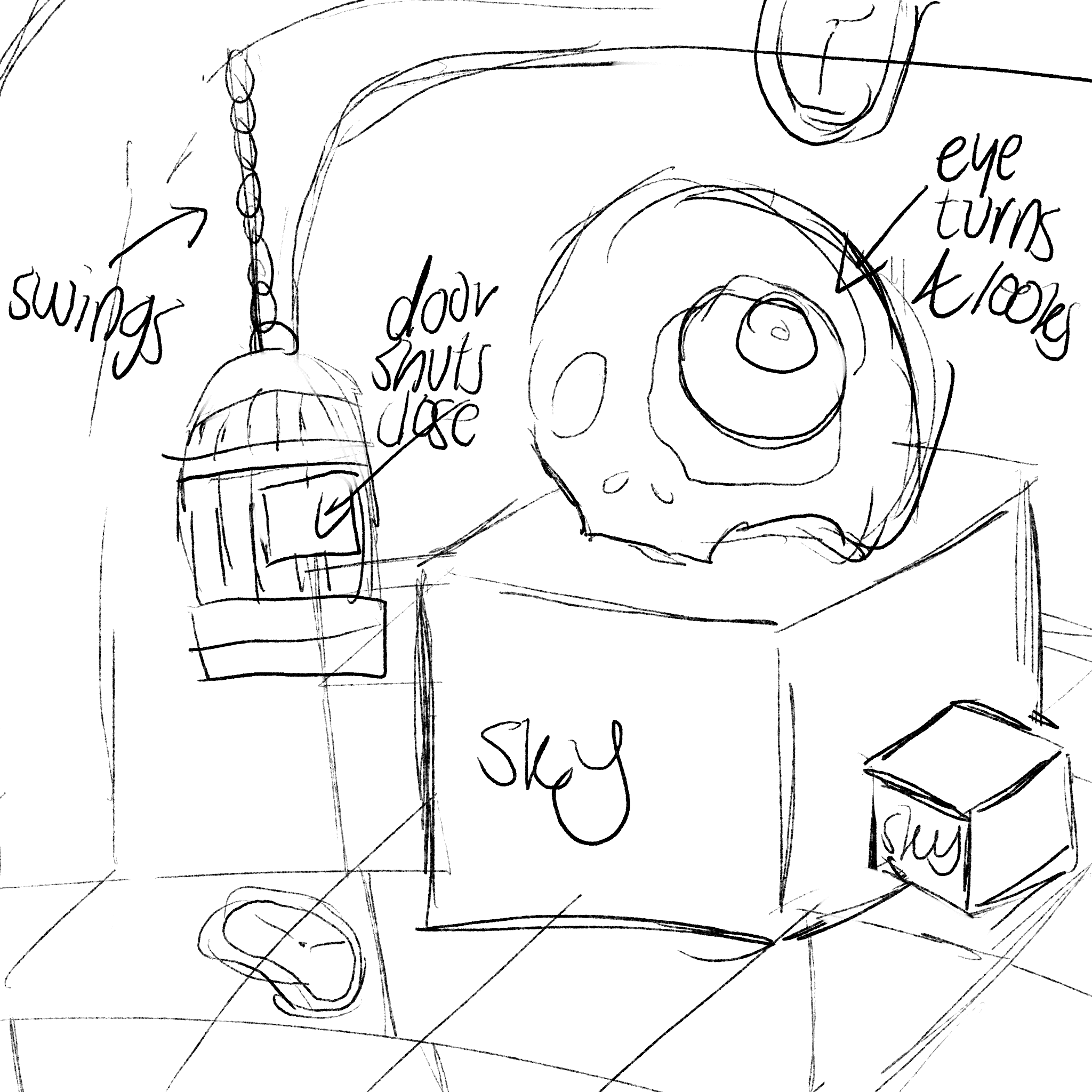
sketches of both the compositons made on my ipad
I started with rough sketches and thumbnails in my journal, mainly blocking out the composition and camera flow. I knew I wanted the transition between styles to be smooth, not jarring, so I played a lot with lighting and camera paths to make everything feel connected.
My first renders were rough — I didn’t have the materials working the way I wanted, and the lighting felt super flat. I took inspiration from my moodboard: ornate trims, powdered pinks, and golds for Rococo; gritty textures and nonsense compositions for Surrealism.
I also explored lighting styles — warm glows and ambient fill for Rococo vs. harsh rim lights and shadows in the surreal half. I tested a bunch of Redshift settings to get the rendering right, especially with transparency and reflections on the cage.
Throughout the build, I referenced real-life Rococo architecture and furniture for scene 1, and leaned on classic surrealist compositions (think Dalí, Magritte) for scene 2. I kept bouncing between the two to balance complexity and clarity.
the making
bringing it all to life.
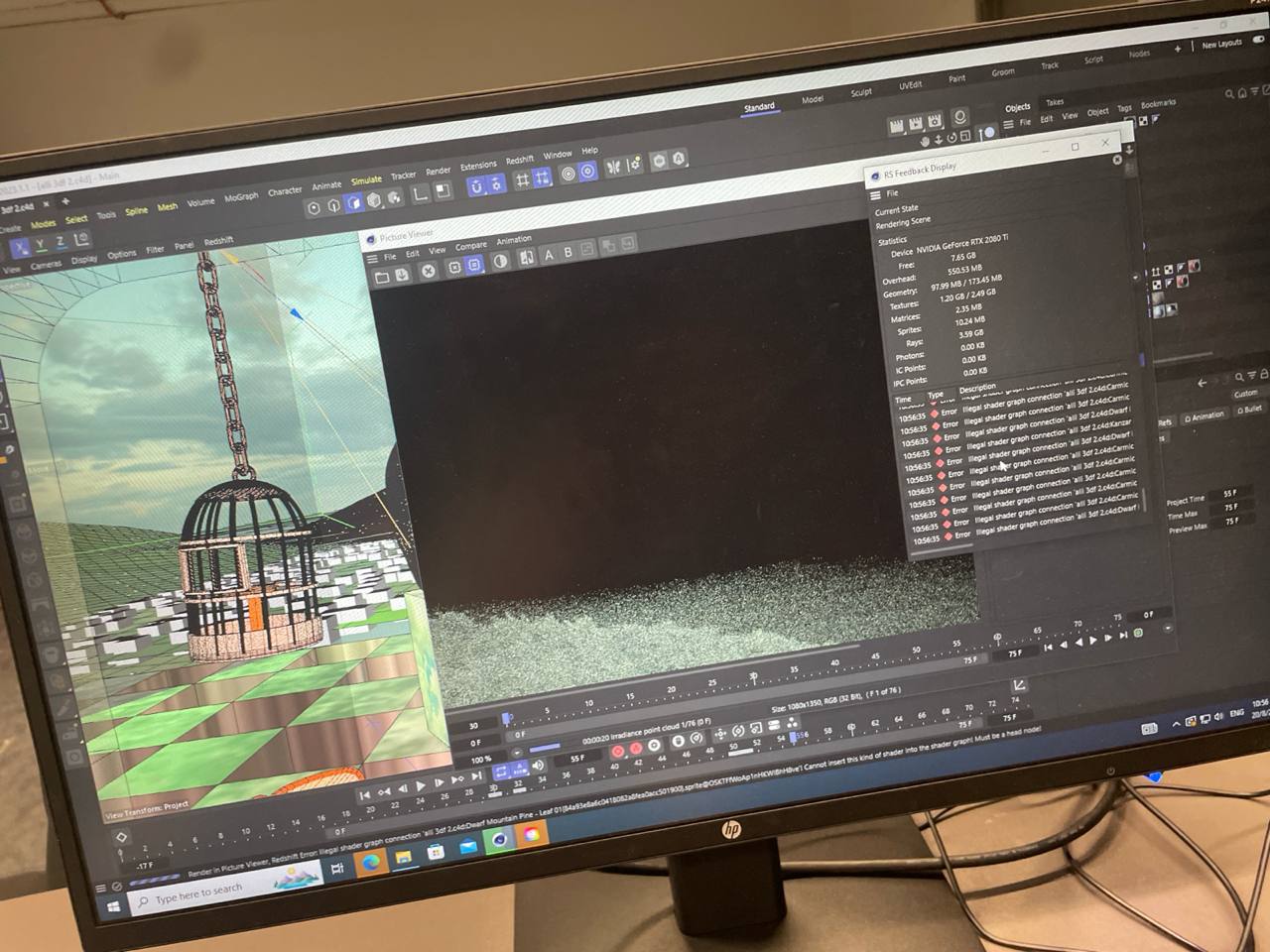
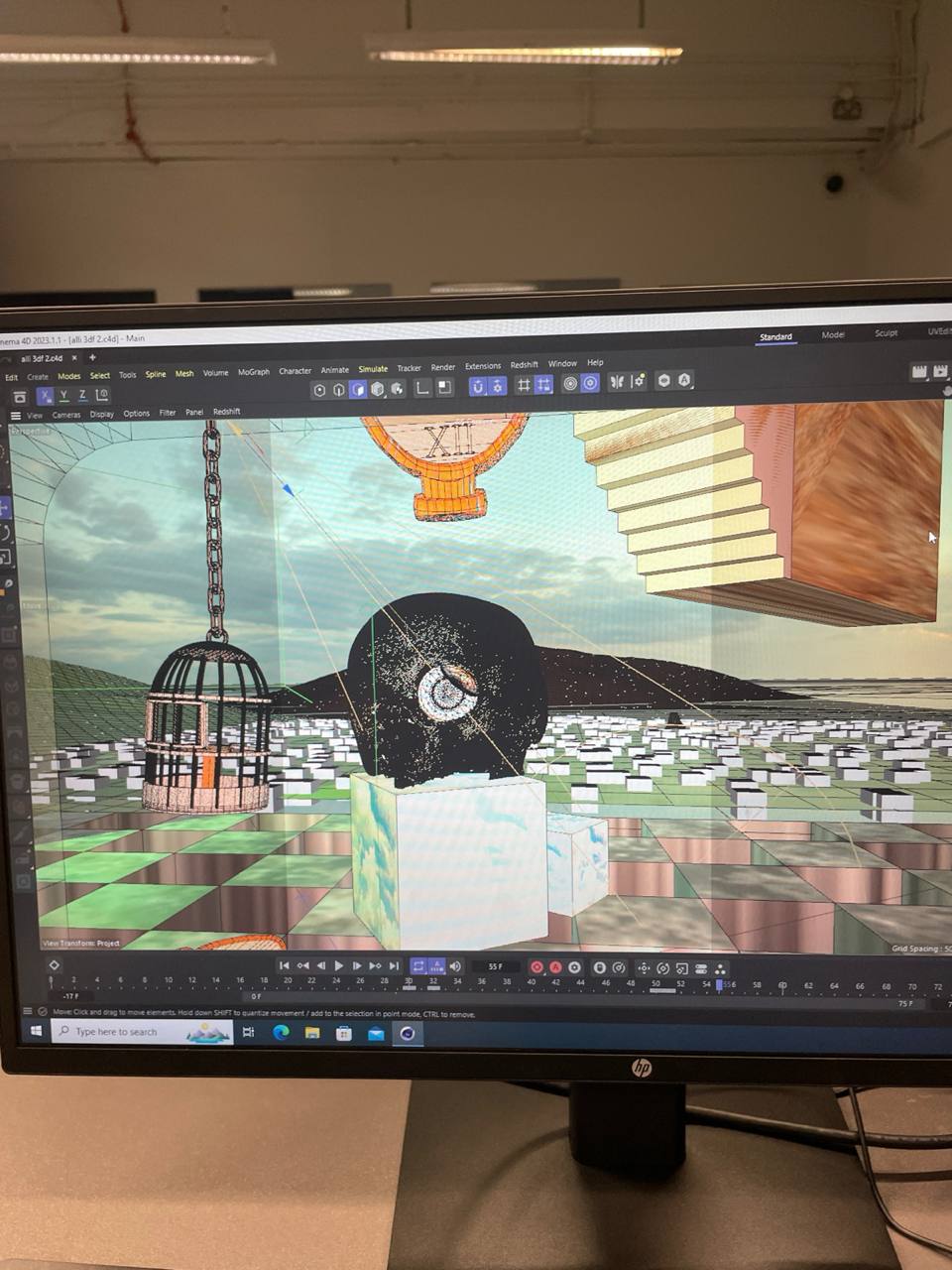
the execution on C4D
Everything was built in Cinema 4D from scratch. I modelled each asset — the arches, the birdcage, the floating eyeball, the ornamental details — and carefully textured them to fit the mood of each style.
In the Rococo scene:
I used smooth pastel surfaces with gold accent trims.
Plants, clouds, and statues were placed to feel balanced and regal.
The birds were animated simply, just enough to show freedom and movement.
I paid attention to framing — making sure it felt soft, open, and airy.
In the Surrealist scene:
I pushed weird object placement: sardines on pillars, eyeballs that track the camera, warped rock formations.
I modelled broken stairs and dripping details to bring that dream logic into 3D.
The birdcage became a symbol of confinement, this time with no birds in sight.
There were a lot of technical fixes along the way — weird shadows, flickering frames, texture glitches. I circled back to my references often to realign the look and tone.
the outcome
what i managed to deliver.
the final product!
In the end, I produced a looping 3D motion clip that flows from soft Rococo elegance into unsettling Surrealist strangeness — and loops right back again.
It’s subtle, weird, and symbolic all at once. The final render included:
Two fully built scenes, modeled and textured in Cinema 4D
A smooth camera transition between both worlds
Symbolic animation centered around the birdcage
Contrasting moods carried by lighting, texture, and layout
A rendered loop that visually tells a story without needing words
What made it extra meaningful was seeing the project used beyond just a classroom assignment; it ended up being featured during my school’s open house, playing on the big screen to promote my design specialization, Visual Communication & Motion Design (VCMD), and the broader Media, Arts & Design (MAD) School. Seeing my work used to represent what our course stands for — creativity, experimentation, and visual storytelling — made all those late nights feel really worth it.
the troubles
what almost ruined it — and how i pushed through.
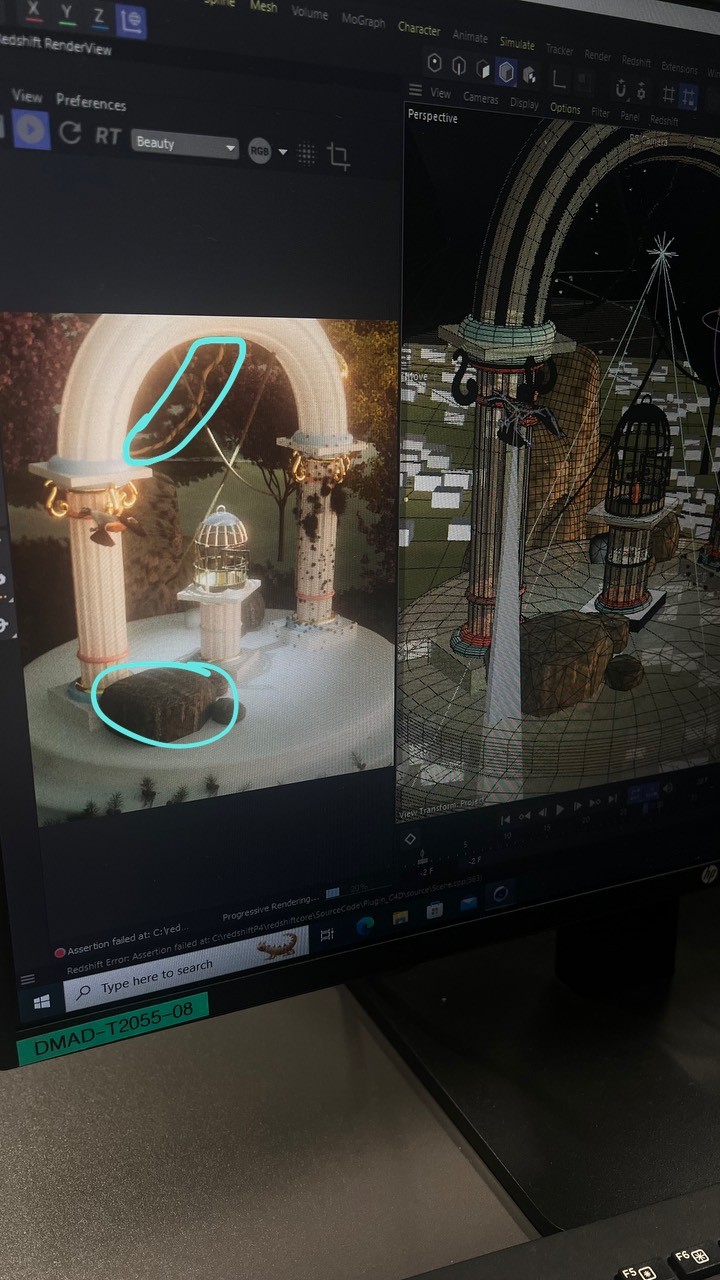
my render crashing + the falling vine that kept disappearing!
Lighting in the Rococo scene gave me a lot of trouble early on — everything looked flat, sterile, and kind of lifeless. I ended up scrapping my entire lighting setup and rebuilding it with warmer tones, bounce lights, and a softer atmosphere to actually capture that dreamy Rococo glow.
Then came the Redshift drama — the software kept crashing mid-render, especially whenever metal or plant shaders were involved (it a falling vine I made — it kept disappearing halfway through the render!)
Trying to blend Rococo and Surrealism without making them feel like two separate projects was another challenge. I had to keep testing material choices, lighting shifts, and composition styles until the transition finally felt natural. Certain camera angles also made the skull model look awkward, and a few of the floating props started clipping through each other, so I had to go in and manually tweak keyframes to clean everything up.
Even the loop gave me issues — the cut point felt too abrupt at first, so I had to carefully adjust the pacing and camera easing to make the ending flow back into the beginning seamlessly. It was a lot of trial, error, and deep sighs — but each fix brought the piece closer to what I originally imagined.
the takeaways
what i learned; and what i plan to do differently.
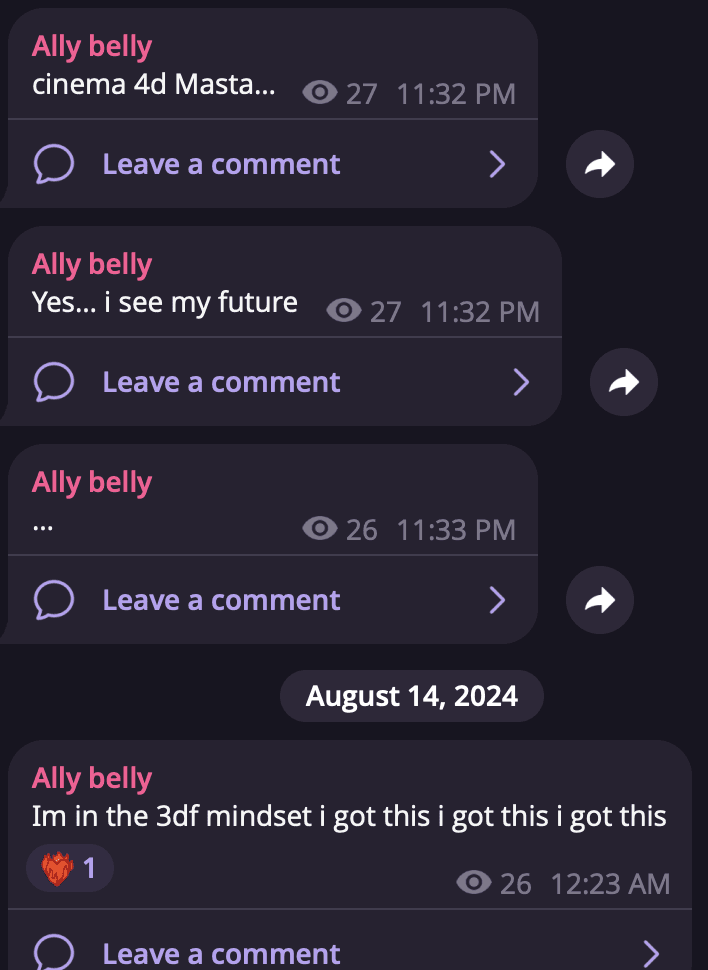
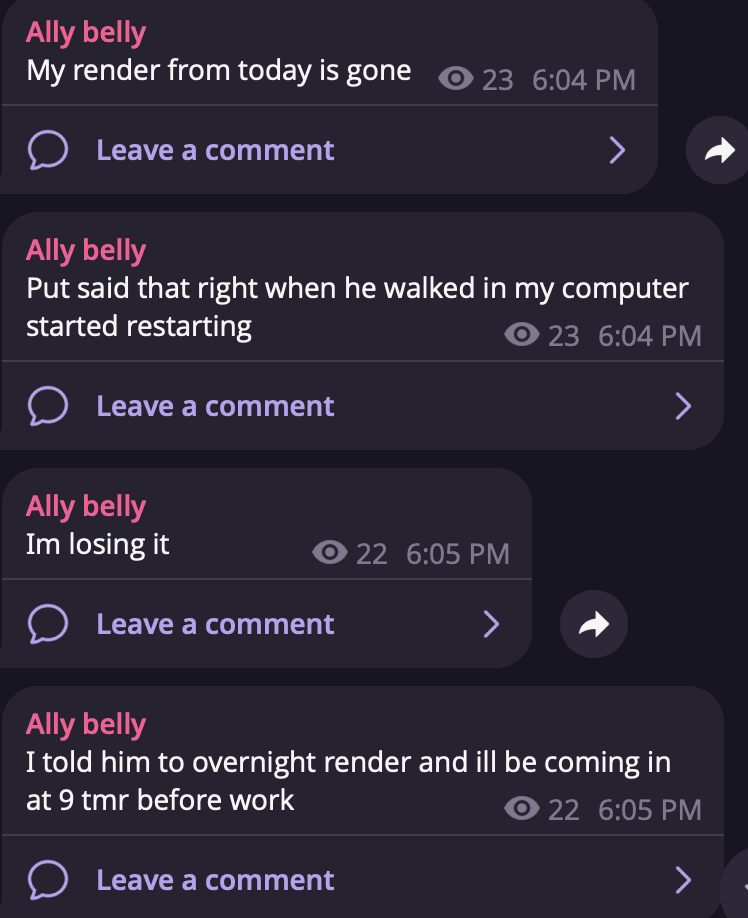
feeling confident in C4D + my friends and i losing it in the schools computer lab
This was the first time I had to build an actual narrative into a 3D space. It taught me a lot about emotional storytelling through design, and how even a looping clip can say something deeper.
I remember the long hours in my school’s computer lab, juggling part-time work at the same time. I’d constantly stress at my job, wondering if my 3D composition was rendering properly. It was a hectic period — my friends and I definitely lost our minds a little — but somehow, we pushed through it together.